
Montblanc
Montblanc Fountain Pens: Prestige, Performance, and Perspective
For more than a century, Montblanc has occupied a unique position in the fountain pen world. Few writing instruments carry the same degree of international recognition, and few luxury brands have been as successful at associating themselves with refinement, status, and professional accomplishment.
The famous white star emblem has become shorthand for executive culture and European luxury in a way that transcends the niche world of fountain pens entirely. And all of us who are active in the fountain pen world can and should be grateful to Montblanc – it is undeniable that there are many people, particularly in the United States, who would not even know what a fountain pen is if it were not for the reach of Montblanc’s marketing efforts.
Yet within the broader community of fountain pen enthusiasts, collectors, and professional nib specialists, Montblanc occupies a more nuanced position. Montblanc fountain pens are unquestionably well-made writing instruments with a long and distinguished history. At the same time, they are not necessarily superior in quality, craftsmanship, or writing performance to competing pens from other established manufacturers. European rivals such as Pelikan and Visconti produce fountain pens that equal Montblanc in materials and engineering, while Japanese manufacturers including Pilot, Platinum, and Sailor often surpass Montblanc in precision, consistency, and overall value.
Understanding Montblanc honestly requires separating the undeniable prestige of the brand from the actual writing qualities of the pens themselves.
The History of Montblanc
Montblanc was founded in Hamburg, Germany, in 1906 during the great expansion of fountain pen manufacturing in Europe and the United States. Originally established as the Simplo Filler Pen Company, the firm sought to produce reliable fountain pens for a growing professional and business class. The company adopted the Montblanc name in 1910, referencing the highest mountain in the Alps as a symbol of quality and achievement.
The white cap emblem, introduced shortly afterward, was designed to represent the snow-covered peak of Mont Blanc. Over time, the company refined both its visual identity and its manufacturing capabilities, eventually establishing itself as one of the premier German pen makers of the twentieth century.
Montblanc’s most enduring product line arrived in 1924 with the release of the Meisterstück, or “Masterpiece.” The Meisterstück series became the defining image of the luxury fountain pen: black resin body, gold trim, restrained styling, and a large handcrafted gold nib. The Meisterstück 149 in particular emerged as one of the most recognizable fountain pens ever produced.
The company benefited enormously from the postwar expansion of international business culture. While many fountain pen manufacturers focused primarily on writing performance and technical innovation, Montblanc increasingly positioned itself as a luxury lifestyle brand. Advertising campaigns emphasized success, sophistication, and personal achievement as much as the act of writing itself.
This branding strategy proved extraordinarily successful. Today, Montblanc is arguably better known to the general public than almost any other fountain pen manufacturer.
The Aesthetics of Montblanc Pens
Aesthetically, Montblanc pens are rooted in conservative European luxury design. Their visual language emphasizes balance, restraint, and timelessness rather than experimentation. The classic black-and-gold Meisterstück remains remarkably close in appearance to models produced decades ago.
For many users, this traditional styling is precisely the appeal. A Montblanc 146 or 149 projects seriousness and professionalism in a way that few other pens can match. The proportions are elegant, the clip design is iconic, and the pens possess a visual familiarity that has become culturally associated with authority and accomplishment.
At the same time, Montblanc’s design philosophy can feel relatively conservative compared to other manufacturers. Italian companies such as Visconti have embraced dramatic celluloids, lava composites, faceted designs, and more adventurous filling systems. Pelikan has long excelled at translucent striped barrels and highly functional piston engineering. Japanese manufacturers often focus on subtle artistry, intricate urushi lacquer techniques, maki-e decoration, and exceptionally refined ergonomics.
In many respects, Montblanc’s greatest aesthetic strength is consistency. Their pens rarely look radical or unconventional, but they are almost always visually coherent and immediately recognizable.
Writing Performance and Nib Characteristics
Where fountain pens truly distinguish themselves is in the writing experience, and this is where perceptions of Montblanc become more divided among experienced users.
A well-adjusted Montblanc nib can be an excellent everyday writer. But the company’s nibs are not universally regarded as superior to their competitors. Pelikan and Visconti certainly offer 14k and 18k nibs which are the equal to those produced by Montblanc. And many users would argue that the big three Japanese manufacturers consistently outperform Montblanc when it comes to nib precision, quality control, and diversity of tipping points.
Pilot, Platinum, and Sailor each possess decades of expertise equal to Montblanc’s own history, and all three companies approach fountain pen manufacturing with an extraordinary emphasis on technical refinement. Many experienced fountain pen users would argue that Japanese manufacturers currently set the global standard for nib performance at comparable or even significantly lower price points.
This becomes especially important when evaluating value. A modern Montblanc fountain pen often commands a substantial premium driven largely by branding, luxury positioning, and international recognition. Comparable writing performance can frequently be obtained from Pilot, Platinum, Sailor, Pelikan, and other manufacturers at lower cost.
That does not make Montblanc pens poor products. When properly tuned, they are typically reliable, attractive, and pleasurable writing instruments. But it does mean that buyers should understand precisely what they are paying for: not merely writing performance, but also prestige, heritage branding, and luxury presentation.
The Importance of Nib Tuning
One area where Montblanc pens particularly benefit is professional nib adjustment and tuning. Like many large-scale manufacturers, Montblanc produces pens in significant quantities, and factory tuning, if it happens at all at the individual pen level, is necessarily aimed at accommodating a broad range of writing styles.
Even among Montblanc fans, there is speculation that the initial tuning of Montblanc fountain pens is aimed more at providing a smooth writing experience when the fountain pen is dipped in ink and briefly written with in the store, rather than optimized for the kind of ink flow and consistency that is necessary for everyday usage.
This is where specialized nib work becomes transformative.
At PacificPenWorks, our nib specialists carefully evaluate and tune each pen to optimize flow, alignment, smoothness, responsiveness, and overall writing feel. Though we are not at present an authorized Montblanc retailer (Montblanc mostly limits sales of its fountain pens to legacy bricks-and-mortar retailers and their own boutiques), we are happy to provide pre-owned Montblanc fountain pens and nibs when available.
A properly adjusted Montblanc fountain pen can become dramatically more enjoyable and expressive writing instrument. The same is true, however, for many competing brands. A tuned Pilot, Sailor, Platinum, Pelikan, or Visconti fountain pen can deliver writing performance equal or superior to a Montblanc while often representing stronger overall value.
A Balanced Perspective
Montblanc fountain pens deserve their reputation as fine writing instruments with an important place in fountain pen history. Their craftsmanship, aesthetics, and cultural significance are entirely legitimate, and for many writers the emotional appeal of owning a Montblanc is real and meaningful.
At the same time, the modern fountain pen market is filled with exceptional alternatives. Pelikan continues to produce some of the finest piston-fillers in Europe. Visconti offers bold Italian artistry and innovation. Pilot, Platinum, and Sailor consistently demonstrate a level of nib precision and value that many enthusiasts believe exceeds Montblanc’s current offerings.
Ultimately, the best fountain pen is not determined by branding alone, but by how well it writes in the hand of its owner. Montblanc makes perfectly good fountain pens, but they exist within a rich global tradition of manufacturers producing instruments of equal or greater quality. With expert tuning and guidance from experienced nib specialists, writers today have access to an extraordinary range of options capable of delivering a truly exceptional writing experience.
Showing all 9 results
-
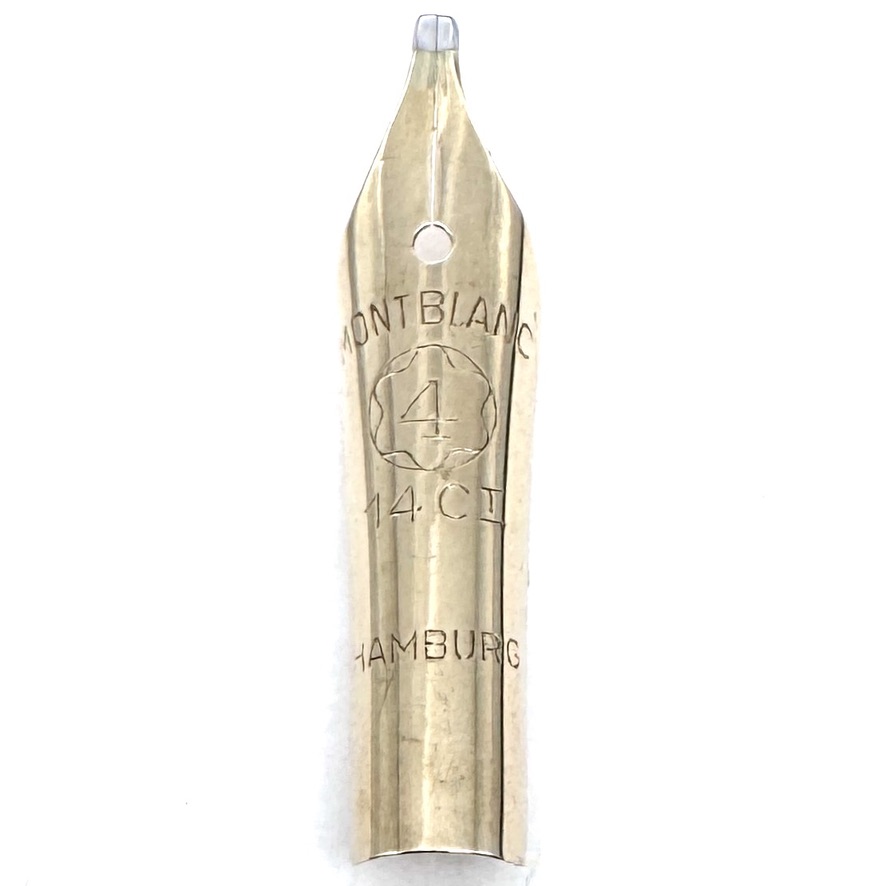
Montblanc #4 Broad Stubby Semi-Flexible Vintage nib
In Stock
$195.00 -
Montblanc 149 2-tone 18K Medium
In Stock
$325.00 -
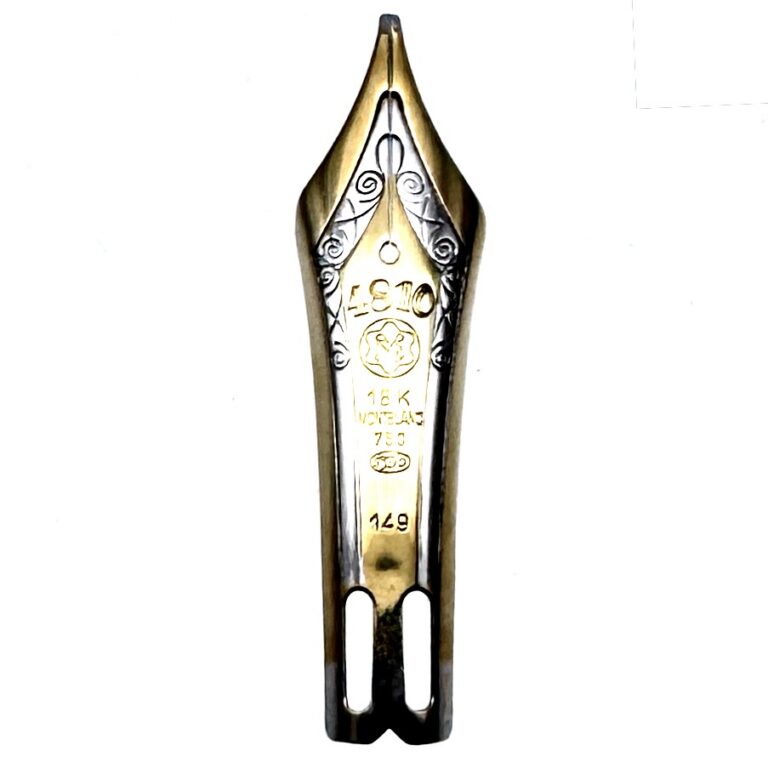
Montblanc 149 Stub 18K
Out of stock
$350.00 -
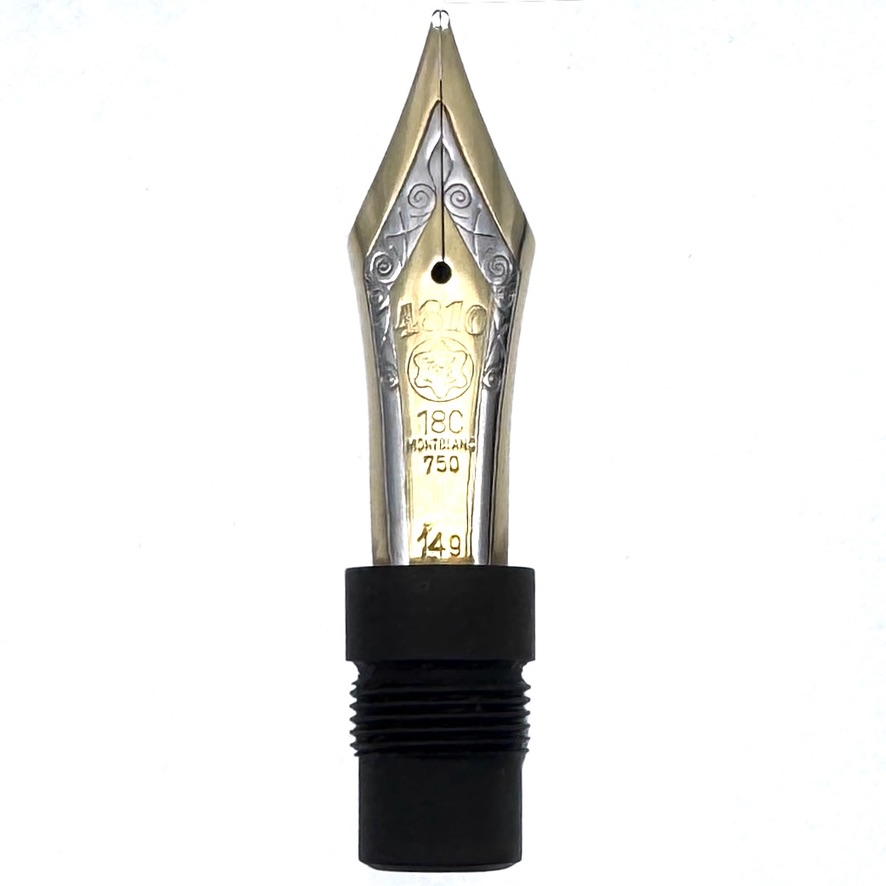
Montblanc 149 two-tone 18C Medium nib with feed
Out of stock
$395.00 -
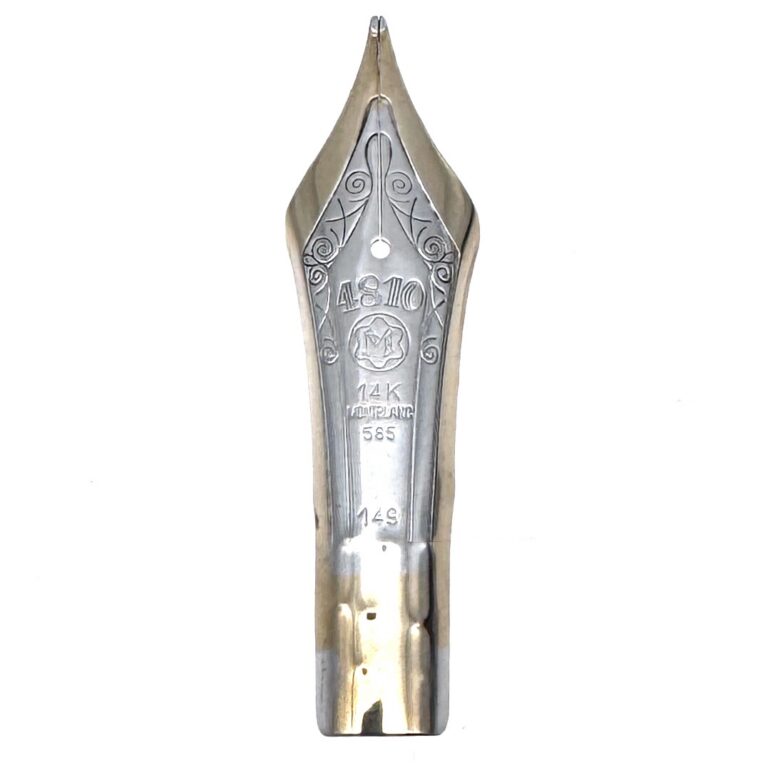
Montblanc 149 two-tone solid mask 14K Medium
Out of stock
$375.00 -
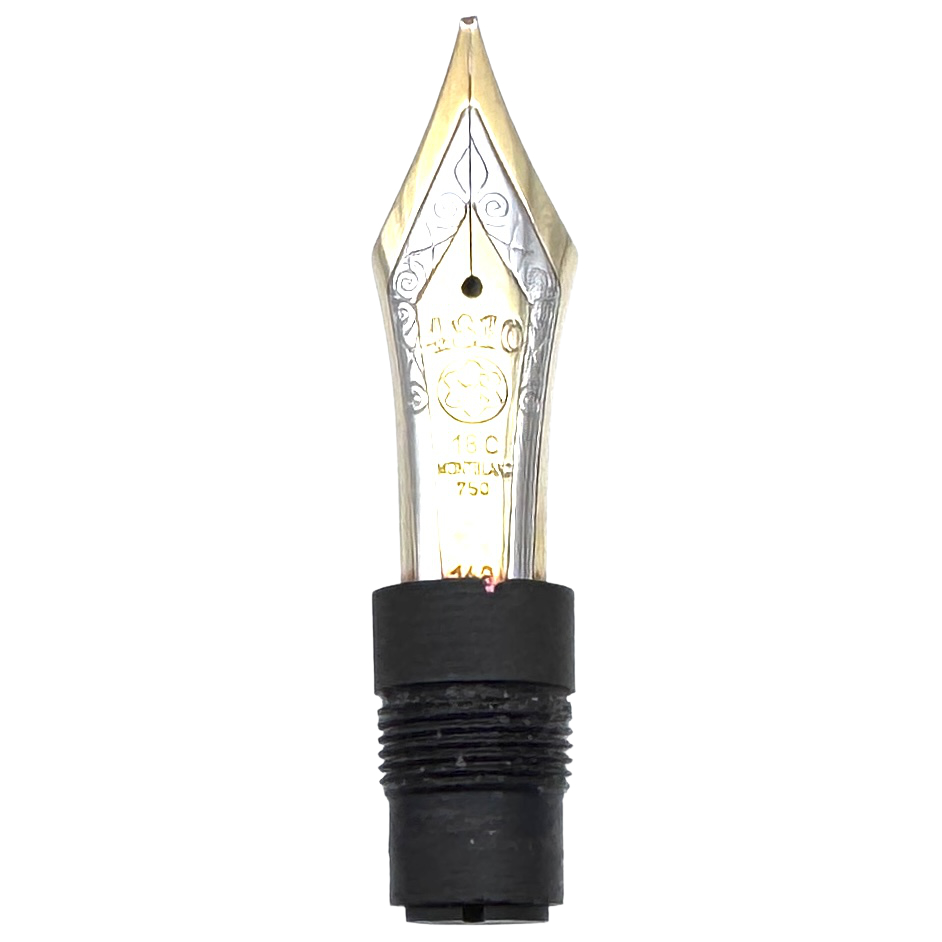
Montblanc 149 Two-Tone w/Hard Rubber Feed
Out of stock
$395.00 -
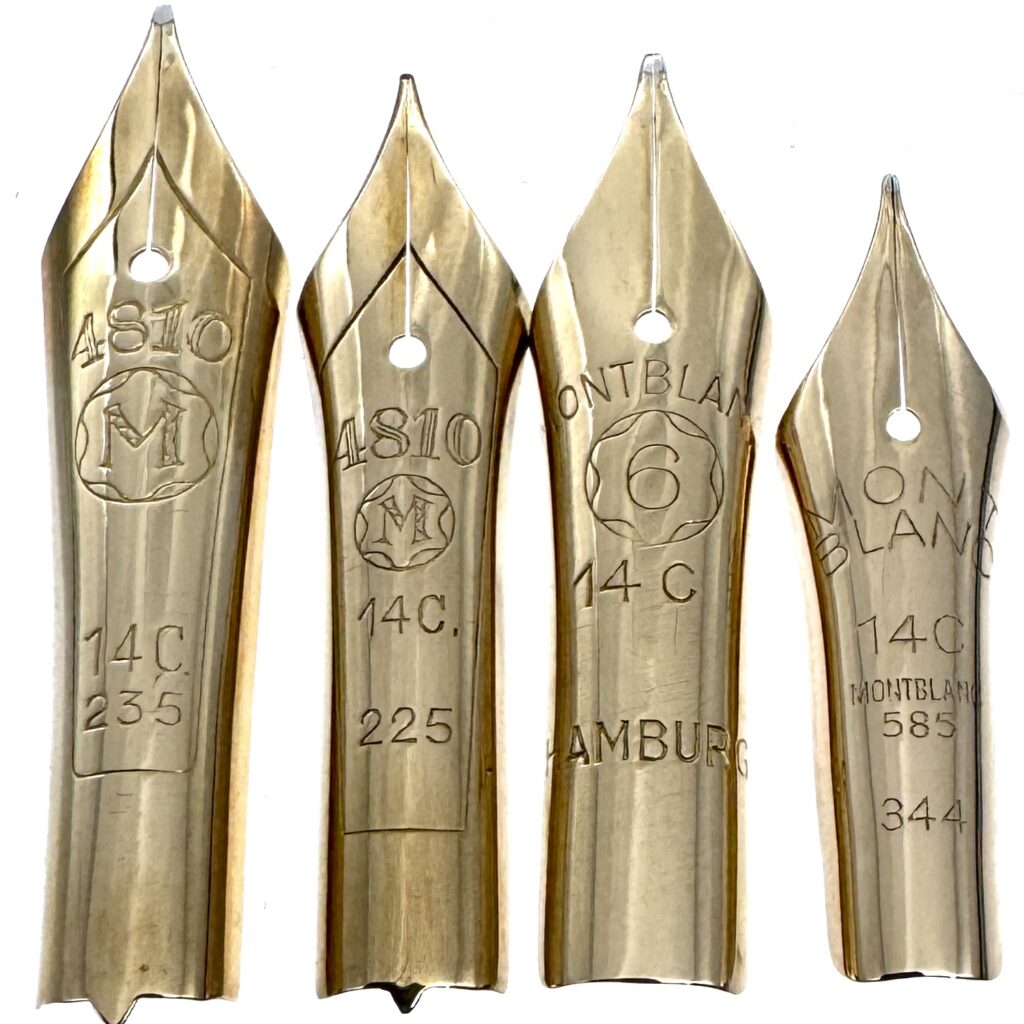
Montblanc 14C larger 4 nibs
In Stock
$495.00 -
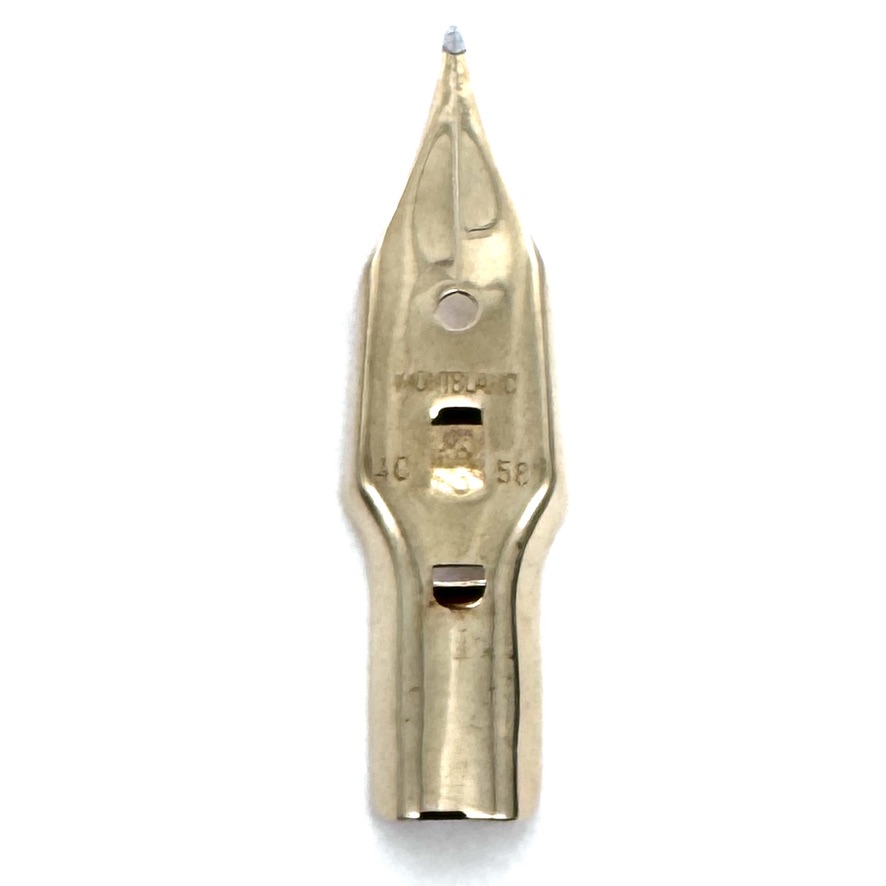
Montblanc 22 Fine 14K nib
In Stock
$95.00 -
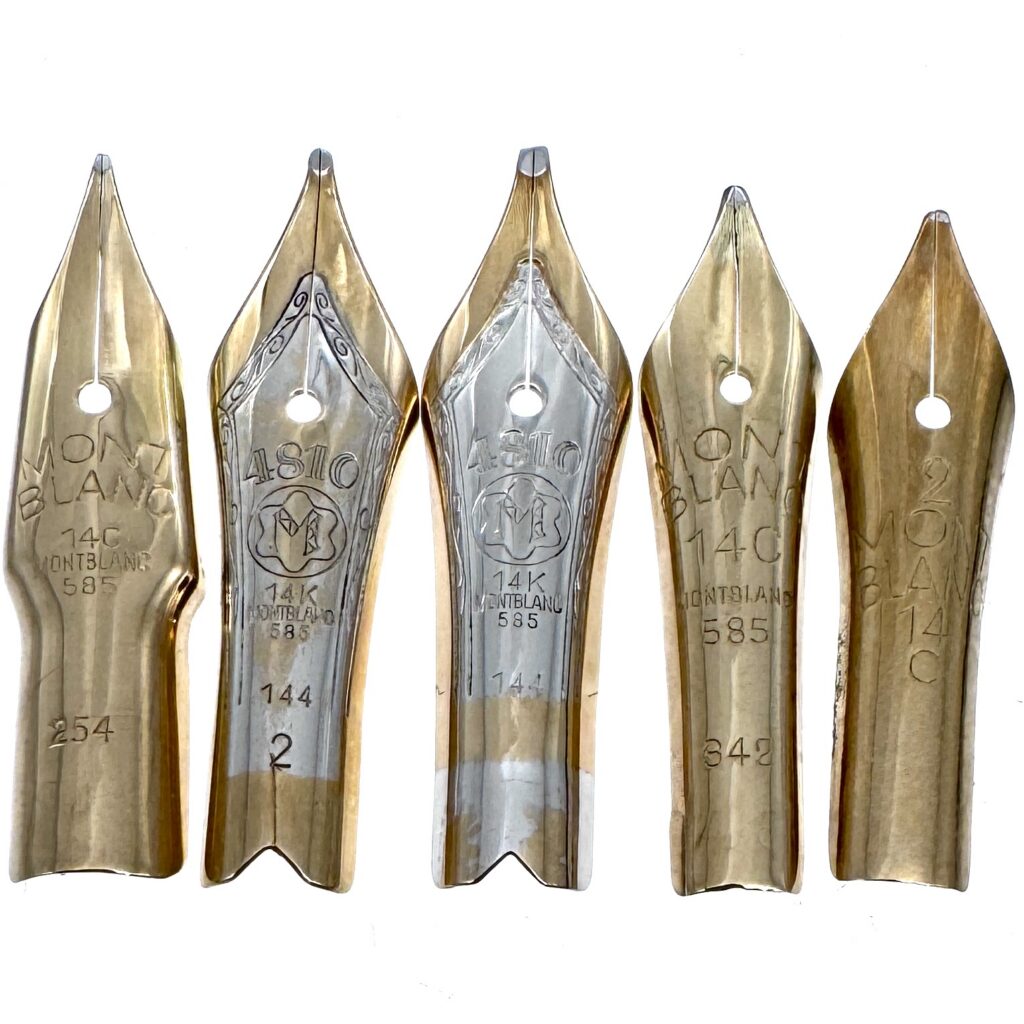
Montblanc Group of 5 Nibs 14C
In Stock
$495.00